

Despite ambitious climate pledges, a persistent “last-mile” gap remains: individual climate actions are often undervalued within existing frameworks. Gyeonggi Province addresses this gap by converting verified citizen actions into measurable public value and rewarding participants with local currency to support local economies. By reinvesting these rewards in climate technologies, the initiative transforms citizens from policy beneficiaries into active co-creators of a sustainable future.
Case Study Library
Where innovations are collected and shared to disseminate and replicate good ideas

Innovations:
0
This website, as well as any data and map included herein, are without prejudice to the status of or sovereignty over any territory, to the delimitation of international frontiers and boundaries and to the name of any territory, city or area.
Case Study
Shared Services Center “ColaboraGov”: An Innovative Model for Delivering Administrative Services…
In order to enable strategic ministerial expansion without increasing costs, ColaboraGov centralizes the sharing of administrative support services among 13 ministries. It ensures savings in resources, gains in scale and quality, and standardized service provision. It comprises more than 41,000 civil servants, 374 services and has an impact on 10 areas - such as human resources, finance and logistics - thus making it easier for the government to direct its efforts towards final public policies.
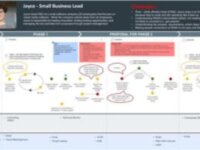
In the U.S. government, community members have experimented with designing the government services they will use. Their lived experience improves service outcomes, builds better relations with the government, and creates greater ownership over the service. This is new; normal participatory design of government services just includes community members for certain activities at certain points, never throughout, and never allowing the community to lead and frame the project or choose methodologies.
Karolinska University Hospital is piloting a new model for nurse-led innovation. The model consists of a framework for enabling nursing organisations to work with innovation and a nurse-led innovation hub concept, where nurses can collaborate with the industry to co-develop solutions for healthcare. Through this, the hospital puts nurses in the driving seat of innovation in healthcare to both develop better solutions for healthcare and promote a sustainable work life for frontline staff.
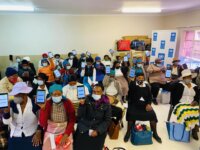
UNDP has introduced a digital system that allows better reporting of public health data in rural communities in Lesotho. It consists of tablets and software designed to fit the needs of Village Health Workers, the Ministry of Health unit that collects the data, whose staff has low digital literacy. The initiative led to increased reporting frequencies (essential for monitoring fast-moving epidemics) and reduced costs; as a side effect, it increased the rates of digital literacy of the personnel.
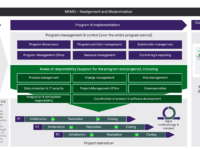
The NEMO program is a forward-thinking initiative reimagining Hamburg's public registry offices to meet future demands by integrating digital transformation with user-centric services. Developed in response to an urgent need for modern, efficient public services, the program orchestrates a holistic transformation by managing 16 interconnected projects aiming to digitize citizen interactions by including agile management, cross-sector collaboration, and advanced technology.
Rainlevelr is a joint approach to reduce the risk of flooding. By utilizing the water basins of horticultural companies, the Delfland horticultural area can absorb heavier downpours, thus preventing flooding for both the businesses and the surrounding area. In Rainlevelr, regional authorities, ‘Glastuinbouw Nederland’ and horticultural companies collaborate closely. The uniqueness of this innovation lies in the collaboration among various stakeholders involved in the use of water buffers…
Case Study
Creating public value: New Personnel Requirements Plan and innovative recruitment methods.
The innovation strategically aligns the Chamber of Commerce of Cosenza's (Camera di Commercio di Cosenza) personnel approach with its evolving goals and societal needs. It introduces a fully innovative, multidimensional recruitment process, impacting professional profiles, job announcements, selection processes, and communication strategies. This benefits the Chamber by enhancing recruitment efficiency and attracting qualified candidates, seemingly distant from institution but capable of…

The City of Ilion has developed a mini forest park within its urban complex. The goal of this pocket park, measuring 600 square meters, was to become, within a short period of time, a dynamic ecosystem that provides critical benefits to people and to urban wildlife. Its primary goal was to be an open nature-based school for the children of the Municipal Kindergarten – which is located next to the mini forest, as well as their caregivers and the neighbourhood inhabitants.
Case Study
Becoming Agile: a way to deliver high quality products and solve long standing reform challenges in…
To improve the Government's response to problems and delivery of products, the Office of the Prime Minister of Croatia introduced Agile methodology and Agile teams, which mimicked startups in using iterations and learning to inform their next move. All governments have policy challenges that seem too complex to be solved. These challenges span across several departments, have some areas where jurisdiction of departments is unclear, and any intervention would have serious impact on all citizens.