

Despite ambitious climate pledges, a persistent “last-mile” gap remains: individual climate actions are often undervalued within existing frameworks. Gyeonggi Province addresses this gap by converting verified citizen actions into measurable public value and rewarding participants with local currency to support local economies. By reinvesting these rewards in climate technologies, the initiative transforms citizens from policy beneficiaries into active co-creators of a sustainable future.
Case Study Library
Where innovations are collected and shared to disseminate and replicate good ideas

Innovations:
0
This website, as well as any data and map included herein, are without prejudice to the status of or sovereignty over any territory, to the delimitation of international frontiers and boundaries and to the name of any territory, city or area.
A digital platform that provides strategic and prospective quantitative and qualitative information, specifically on trends, risks, opportunities, scenarios, future events, and other topics. It is designed for use, consultation, and input by planners and the general public. It seeks to reduce the information gap, ensuring the validity and up-to-date nature of data for the formulation of plans and policies, thus facilitating the anticipation of challenges and the exploitation of opportunities.
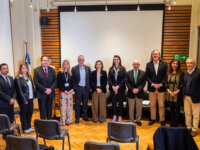
Futures and foresight methods are fundamental tools to inform decision-making and public policy in order to consider a wide range of future possibilities. The creation of a Latin American Future Network seeks to articulate existing efforts from many countries and enhance capacity building in the region, since capacities are still not well developed. This will benefit citizens by improving public sector services and future-proofing policies aimed at the population wellbeing.
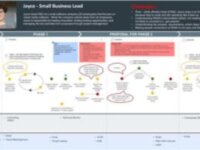
In the U.S. government, community members have experimented with designing the government services they will use. Their lived experience improves service outcomes, builds better relations with the government, and creates greater ownership over the service. This is new; normal participatory design of government services just includes community members for certain activities at certain points, never throughout, and never allowing the community to lead and frame the project or choose methodologies.
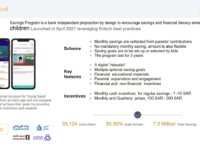
A savings Program that is designed to encourage savings and financial literacy amongst Saudi children and providing financial inclusion for Young Saudi population (>18) from an early age and encouraging them to save and achieve their goals by providing attractive incentives and rewards and leveraging fintech best practices while applying behavioural economics.
Case Study
Itla View – Crowdsourcing and AI-based digital tool for knowledge management and systems…
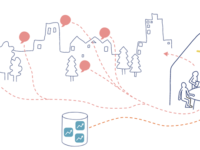
Itla View is a digital tool to help local services for families with children to manage their activities better using up-to-date data, to anticipate the need for corrective services and identify opportunities for preventive work. It enables different actors to form a shared holistic picture of the well-being of children, young people and families in their area. Itla View collects observations sent by field actors on the daily lives of children and families. It utilizes artificial intelligence to…
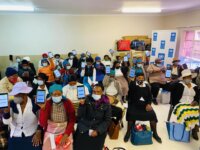
UNDP has introduced a digital system that allows better reporting of public health data in rural communities in Lesotho. It consists of tablets and software designed to fit the needs of Village Health Workers, the Ministry of Health unit that collects the data, whose staff has low digital literacy. The initiative led to increased reporting frequencies (essential for monitoring fast-moving epidemics) and reduced costs; as a side effect, it increased the rates of digital literacy of the personnel.
"Being new in Norway", is a prioritized life event in the Norwegian government`s digitization strategy aiming to:
Provide a holistic and comprehensive public info to the newcomers as end-users
Accelerate newcomers’ participation in work and society
Increase public resources efficiency
The website nyinorge.no/en is addressing those goals and is a hub for accessing public information to newcomers
We used foresight methodology to contribute to more long-term and sustainable service delivery.
UAsk, born from the need for seamless access to government services in the UAE, is an AI-powered chatbot transforming citizen engagement. Serving residents, businesses, and visitors, it leverages generative AI, particularly ChatGPT, for real-time, multilingual, and reliable information. Its innovation lies in delivering an inclusive, user-centric, and efficient digital experience, revolutionizing interactions with diverse government services within the digital governance realm.
The City of Austin has piloted an anticipatory governance tool named the Civic Research Agenda (CRA) to help the City become future-ready in the face of complex civic challenges.
The CRA leverages a strategic foresight methodology to proactively plan for plausible future scenarios and identify implications for decision-making today, thus moving the City away from reactionary and short-sighted policy making and enable it to “look around the corner” to future challenges and opportunities.