

Despite ambitious climate pledges, a persistent “last-mile” gap remains: individual climate actions are often undervalued within existing frameworks. Gyeonggi Province addresses this gap by converting verified citizen actions into measurable public value and rewarding participants with local currency to support local economies. By reinvesting these rewards in climate technologies, the initiative transforms citizens from policy beneficiaries into active co-creators of a sustainable future.
Case Study Library
Where innovations are collected and shared to disseminate and replicate good ideas

Innovations:
0
This website, as well as any data and map included herein, are without prejudice to the status of or sovereignty over any territory, to the delimitation of international frontiers and boundaries and to the name of any territory, city or area.
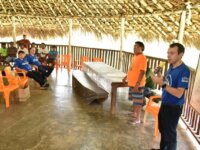
The "Programa Justiça Cidadã" in Brazil's Roraima state, led by the State Court of Justice, extends legal services to remote regions, including indigenous and riverside communities, addressing the needs of Venezuelan migrants. Through permanent service points and digital integration, it promotes inclusivity and accessibility, ensuring all residents can access legal support.
Case Study
Shared Services Center “ColaboraGov”: An Innovative Model for Delivering Administrative Services…
In order to enable strategic ministerial expansion without increasing costs, ColaboraGov centralizes the sharing of administrative support services among 13 ministries. It ensures savings in resources, gains in scale and quality, and standardized service provision. It comprises more than 41,000 civil servants, 374 services and has an impact on 10 areas - such as human resources, finance and logistics - thus making it easier for the government to direct its efforts towards final public policies.
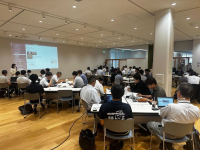
Digital Transformation Co-Creation Platform enables national and local governments to co-create policies and services through knowledge sharing and mutual learning. In Japan, diverse knowledge and challenges exist across about 1,780 local governments but are not adequately shared due to hierarchical communication structures. Digital Agency has developed a co-creation ecosystem where government officers nationwide can engage in open, flat, and two-way communications as individuals.
Complex government documents may confuse citizens, making it difficult to access services such as pensions or benefits. This work engages GenAI to rewrite these texts in plain language, maintaining legal accuracy while increasing clarity. Focused on the Service Pages of Italy's National Institute of Social Security portal, which serves 45 million users, AI surpassed human experts in user preference, enabling the Institute to communicate inclusively and at scale.
The project proposes a system for extracting and analysing information from the medical records of breast cancer patients, using artificial intelligence. This would support research, personalised medicine and health decision-making, benefiting clinicians and regional authorities. This provides an automated alternative to accelerate translational research, promote personalised medicine and improve the efficiency of health services.

vCity is a human-centric platform for urban digital twins, with the goal of improving life quality within the city by assisting urban planners make evidence-driven urban decisions. vCity's innovative approach combines 1) simulation by designing virtual replicas of the cities, 2) what-if scenario tools in urban planning and 3) getting the "pulse" of the city from digital platforms for citizen participation.
The study integrates Artificial Intelligence (AI) techniques, and a digital twin methodology to process and interpret urban data streams derived from citizen interactions with the city's coordinate-based problem mapping platform. Using an interactive GeoDataFrame within the digital twin methodology, dynamic entities facilitate simulations based on various scenarios, allowing users to visualize, analyze, and predict the response of the urban system at
SignAvatar's long-term vision is to enable real-time sign language generation, opening doors to multiple applications such as TV, Social Media, Video calls, Online courses, and many applications in the public sector.
Our first product is TransportSign, a system for auto-generated service information in Sign Language for Airports and Train Stations. By transforming audible announcements and on-screen text into SL, we enable more than 460 Million Deaf individuals around the world to travel freely
Case Study
Portal de Contrataciones Abiertas de la Compra Pública -Open Procurement Contracting Portal
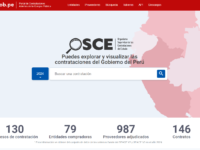
The Organismo Supervisor de las Contrataciones del Estado (OSCE) supervises public procurement, ensuring integrity and efficiency. Its Portal de Contrataciones Abiertas de la Compra Pública plays a crucial role, improving transparency with international standards. By implementing the Open Contracting Data Standard (OCDS), it provides detailed access, benefiting entities, suppliers, citizens and civil society.